Gearing Up for Hockey Season: The Complete Equipment Guide
Hockey season is almost here, and if your kit bag has been gathering dust since last year, now's the time to sort it out. Here's a straightforward answer to the question every player or parent asks at the start of the season: what do you actually need, and what's worth upgrading?
Quick answer: A field hockey player needs a stick sized to their height, turf-specific hockey shoes, shin guards, a mouthguard, and a kit bag to carry it all — with goalkeepers requiring additional pads, gloves, and a helmet. Everything else (grips, gloves, water bottles) is a comfort upgrade rather than a strict requirement.
Why Equipment Prep Matters Before Season Starts
Every year, hockey season sneaks up faster than expected. Sticks that were "fine" in September have often warped, delaminated, or simply been outgrown over the off-season, and shin guards get left behind at the last training venue. Sorting out your equipment in the weeks before the first match - rather than the night before - gives you time to break in new shoes, test a new stick's feel, and replace anything that didn't survive the off-season.
The Field Hockey Equipment Checklist
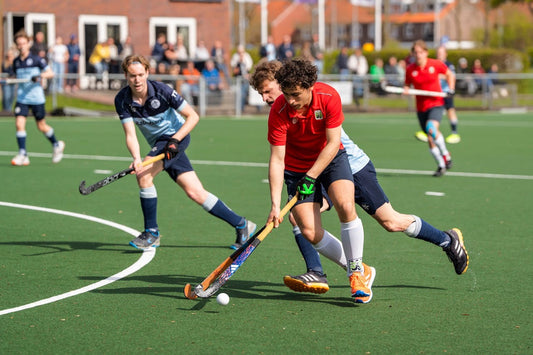
Whether you're a first-season junior or a club veteran, this is what belongs in every hockey bag:
- Hockey stick – sized correctly for your height (more on this below)
- Turf shoes – non-marking, multi-stud soles built for astro or sand-based turf
- Shin guards – non-negotiable for outfield players
- Mouthguard – required at most club and school levels
- Hockey socks – to hold shin guards in place and meet team/club colours
- Kit bag – to carry and protect your gear between the car, the clubhouse, and the pitch
-
Water bottle – hockey matches run long, and turf sessions are thirsty work.
Goalkeepers need considerably more: leg guards, kickers, a chest guard, a helmet with throat protector, goalkeeping gloves, and often a separate goalkeeping stick.
How to Choose the Right Hockey Stick
Stick length is usually measured against your height - taller players generally need a longer stick, while juniors should size up gradually as they grow rather than buying an adult-length stick "to grow into," which affects control. Bow (the curve profile) and weight also matter: attacking players often prefer a lighter, more flexible stick for skills and quick hits, while defenders may lean toward a slightly heavier, more durable build. At Poobie Naidoo's, our range includes Gryphon, Grays, Voodoo, and Adidas sticks across junior and senior sizes, so there's room to match a stick to playing style and budget.
Protective Gear: Don't Skimp Here
Shin guards and mouthguards are the two pieces of kit most likely to get overlooked until an injury makes the case for them. A properly fitted mouthguard (we stock options from Mogo, Opro, and Admiral) protects against the accidental stick and ball knocks that are simply part of the game, while good shin guards should sit snugly under your socks without shifting during play. If you're playing goalkeeper, investing in Kookaburra or Grays protective gear built specifically for that position is worth prioritising over cheaper generic alternatives.
Turf Shoes: Why They're Worth the Investment
Running shoes and turf shoes are not interchangeable. Hockey-specific shoes are built with a low profile for lateral stability and a stud or pimple pattern designed to grip artificial turf without catching. Wearing the wrong shoe on turf increases your risk of ankle rolls and ruins grip during sharp direction changes. We carry hockey shoes from Adidas, Asics, Grays, and Gryphon — see our full breakdown in How to Choose the Right Hockey Shoes for a deeper dive on picking the right pair for your surface.
Caring for Your Gear During the Season
A few habits stretch the life of your kit considerably. Wipe down your stick after wet or sandy turf sessions to prevent grip and shaft wear, air out shin guards and shoes after every match rather than sealing them straight back into a bag, and check your mouthguard regularly for cracks or thinning. A well-ventilated kit bag can make a real difference over a long season.
Shop the Full Hockey Range at Poobie Naidoo's
We stock over 4,000 products across every sporting code, and our hockey range covers sticks, shoes, and equipment from Adidas, Grays, Gryphon, Voodoo, Medalist, Kookaburra, Asics, Fox40, and more - for men, women, and juniors. Shop Hockey online now, with nationwide courier delivery across South Africa.

Frequently Asked Questions
What equipment do you need for field hockey?
At minimum, you need a correctly sized hockey stick, turf shoes, shin guards, a mouthguard, and hockey socks. Goalkeepers require significantly more protective equipment, including pads, gloves, a helmet, and a chest guard.
How much does hockey equipment cost?
Costs vary widely by level and equipment brand. A junior starter stick and shoes can be found at accessible entry-level prices, while performance-level sticks and shoes for club or provincial players cost considerably more. Mouthguards, shin guards, and socks are relatively inexpensive and worth buying new each season.
How do I know what size hockey stick I need?
Stick size is generally matched to your height, with juniors sizing up as they grow. Standing the stick upright next to your hip is a common in-store way to check fit - our staff can help you size correctly if you're unsure.
How do you clean and care for hockey equipment?
Wipe sticks down after use, especially on wet or sand-based turf, and let shoes and shin guards air dry fully between sessions rather than leaving them zipped in a bag. Regularly check mouthguards and padding for wear.
When does hockey season start?
Hockey season timing depends on your school or club's fixture calendar, but most South African club and school hockey runs through the winter sport months.
Tags:
Related articles
Your Ultimate World Cup 2026 Guide: Gear Up, Get Ready to Watch, and Play Like a Pro
Post Date:
Jun 11, 2026